
Key Takeaways
- The journey to becoming a skilled brick mason is rooted in hands-on experience, active learning, and a willingness to adapt.
- Effective communication is crucial for efficiency on a job site, impacting both individual performance and overall project success.
- Work-life balance is achievable in trade work with mindful scheduling and prioritizing personal life, debunking common misconceptions about life in construction trades.

Starting Your Journey in Masonry: A Hands-On Approach
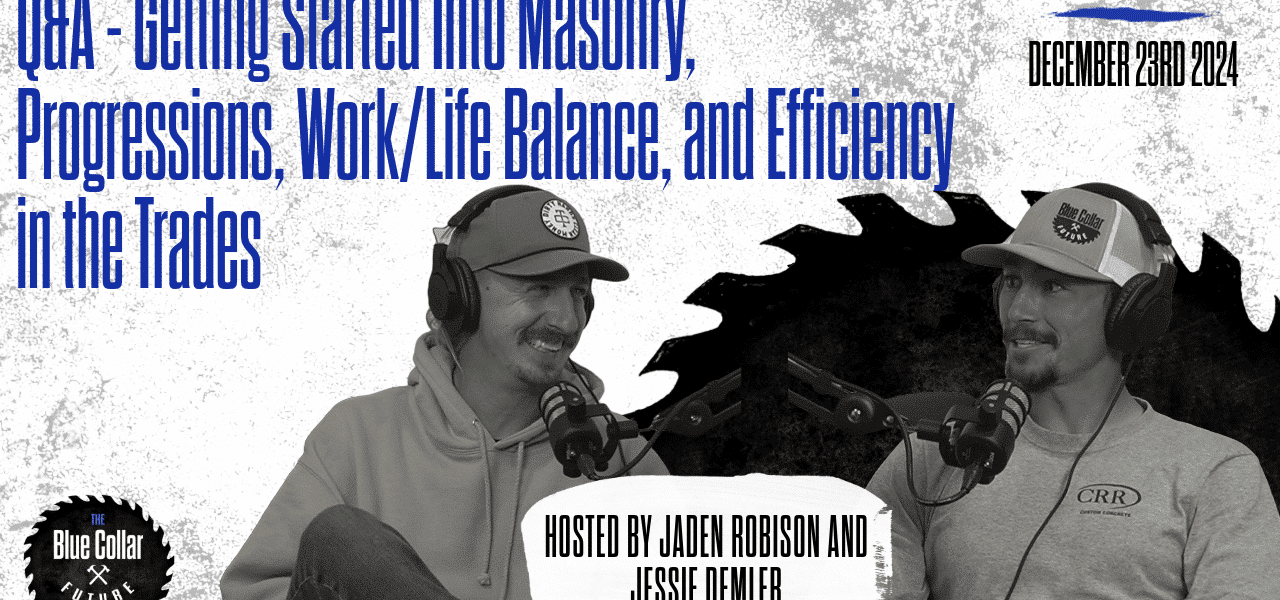
Embarking on a career in masonry involves more than just laying bricks; it’s a profound journey where experience and continuous learning play pivotal roles. According to Jaden Robison and Jessie Demler from the “Blue Collar Future” podcast, one starts the journey as a hod tender or laborer, gaining foundational skills. Jesse Demler explains, “It’s basically start at that general hod-tending stage, move up to the skills, and then once you prove that, you can move into being an apprentice on the wall.”
The beauty of this career path lies in its reliance on active participation and curiosity. Robison adds, “Like you said, work…get far enough ahead that you can jump in and be like, hey, let me try that for a minute.” It’s clear that a proactive attitude and eagerness to learn can fast-track career advancement in trades.
Additionally, smaller crews may offer more personalized guidance, whereas larger companies might have more structured progression paths. Demler highlights, “In a smaller crew, you might have the opportunity…because they need you to,” emphasizing the varied experiences across different company sizes.
This hands-on approach not only fosters skill acquisition but also builds a strong foundation for professional growth, underscoring the potential for a fulfilling career in masonry.
The Power of Communication for Efficiency
Efficiency on a job site is not merely a function of task execution but significantly hinges on the quality of communication. Effective dialogue among team members and across trades ensures that projects run smoothly and are completed on time. Jessie Demler underscores this point: “A big part of efficiency probably comes down to communication…it travels to commercial as well.”
Communication channels, whether in weekly meetings or daily site updates, help clarify objectives and align efforts. They also facilitate problem-solving, allowing quick adjustments to the workflow. Jaden Robison notes that having competent laborers who can recognize what’s needed is essential, “If I have all brick all day, mortar all day, and I can keep all masons laying…that’s the best way to make money.”
Furthermore, on larger job sites involving multiple trades and contractors, like the ones Demler describes, communication becomes even more critical. “Having something like getting the right equipment…as a company, recognizing those needs and meeting them,” he adds, highlighting the broader scope of maintaining workflow and meeting deadlines.
Ultimately, the integration of seamless communication processes from top to bottom ensures not only efficiency but also project and financial success.
Balancing Life and Work in a Trade Profession
Contrary to popular belief, maintaining a healthy work-life balance is feasible in the trades, suggesting that life outside work is as essential as professional commitments. Demler shares, “Life outside of work is far more important…go enjoy it. It’s about getting 40 and then taking a vacation, using PTO.”
The notion that trade work is all-consuming tends to be more myth than reality. As Jaden points out, “Work is not your life unless you want it to be…you can work extra if you want.” This flexibility allows individuals to carve out time for personal interests, family, or even additional learning opportunities.
Moreover, the cycle of seasons influences work patterns, with busier periods followed by slower ones, notably in construction. Robison elaborates on this dynamic, noting how his workload adjusts with seasonal changes, “We put in more time while we have the time in preparation for the times we can’t work in the winter.”
These insights reveal that with strategic planning and communication, a career in masonry does not mean sacrificing personal life. Instead, it allows for a well-rounded existence where professional and personal aspirations coexist harmoniously.
The insights from the “Blue Collar Future” podcast underscore the profound implications of choosing a career in the trades. Active learning, adapting to change, and maintaining strong communication not only drive career growth but also enhance project efficiency. Moreover, balancing professional commitments with personal life is not only achievable but essential. As the trades continue to evolve, showcasing the wisdom of experience and the importance of community stands as an inspiring tenet for sustainable success.