
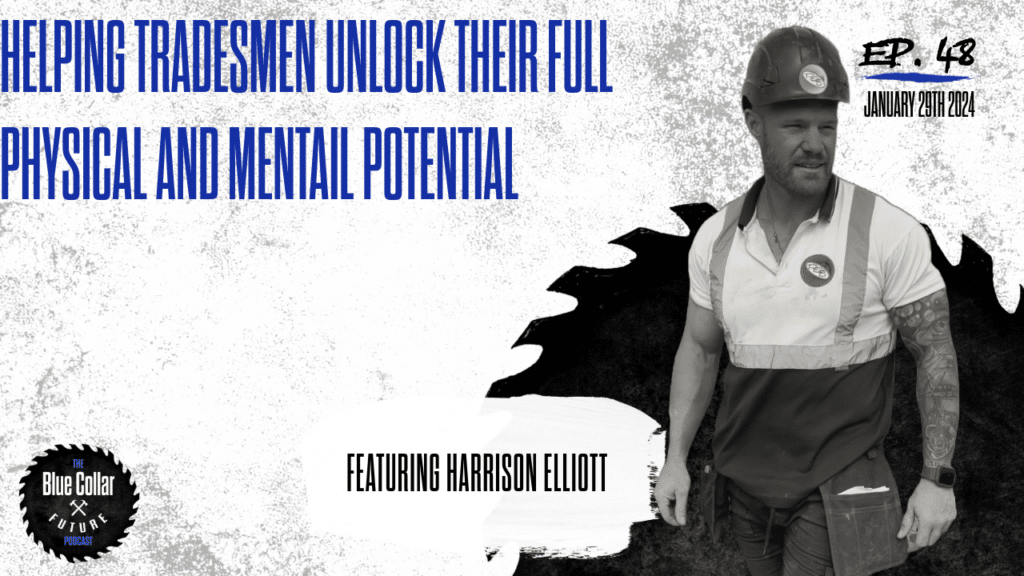
In a world that often prioritizes white-collar positions, blue-collar workers remain a fundamental thread in the tapestry of society. Yet, stigmas and outdated stereotypes persist, clouding the true value, potentials, and realities of those who build, create, and maintain the fabric of our everyday lives. Jaden Robison’s dialogue with Harrison Elliott, a UK bricklayer with a passion for fitness and mental health advocacy, peels back layers of misconceptions while highlighting the untapped potential within the blue-collar sector.
Key Takeaways:
- Fitness in the trades: The transformative impact of physical activity on the blue-collar workforce’s health, job performance, and life balance.
- Stigmas surrounding trades work: How misperceptions of blue-collar professions can obstruct personal growth and societal appreciation of vital trades.
- The economic sense of trades: The financial and educational viability of trades careers compared to traditional higher education paths.
Fitness in the Trades: More than Physical Strength with harrison elliott
Fitness amongst blue-collar workers is not merely a matter of physical prowess or endurance in the face of strenuous labor. As Harrison Elliott articulately elaborates in the conversation, there is a profoundly beneficial relationship between consistent fitness routines and the overall well-being of blue-collar workers. Despite the physically demanding nature of their roles, practitioners like Elliott underscore the necessity of fitness regimes to counteract repetitive stress injuries, improve job performance, and maintain longevity in their professions.
“Managing the work at the gym actually keeps me healthy. It keeps my mobility and that sort of thing. It helps me if I didn’t go to the gym, if I have a few days off, which I never like doing, but if I do have a few days off, I always feel it in work, everything starts to seize up a bit,” explains Elliott.
The broader implications are clear; integrating specific and balanced physical exercise can massively improve a tradesperson’s health span, enabling them to harness greater benefits from their labor. In a vocation where physical downturns can terminate careers prematurely, a well-structured fitness regimen is not just beneficial, it’s essential.
Combating Stigmas: Reimagining the Trades’ Image
Perhaps one of the most poignant elements of Robison and Elliott’s conversation is the exploration of stigmas attached to blue-collar work. Elliott shared anecdotes about the stereotypes he faces, yet he is determined to shatter misconceptions by demonstrating the multifaceted nature of tradespeople and the sophistication of their work.
“There’s a big misconception…that we’re constantly…looked down upon…I feel like we’re looked down upon, that society doesn’t appreciate our value,” Elliott reflects.
These stigmas not only affect individual self-esteem but also have real-world implications for the incoming workforce and the economic health of the trades industry. As Elliott highlights, there’s a critical shortage of skilled workers, partly because societal misperceptions deter young aspirants. By combatting these stereotypes, we can unlock a resurgence in trades careers, ensuring essential vocations’ vitality and esteem for decades to come.
The Trade Route vs. Higher Education: A Financial Perspective
Elliott’s narrative reveals an enlightening perspective on the financial viability of trades compared to the conventional university path. With soaring tuition fees, burgeoning student debt, and uncertain graduate job markets, Elliott’s testimonial begs the reconsideration of trades as not only economically sensible but potentially more lucrative.
“People aren’t prepared to take that time to be the apprentice…but if you can stick at it…in ten years time, they’re going to be the prime, prime pick in their field for that trade,” Elliott states, affirming the financial upside.
This aspect resounds with the global narrative, where a shift in perception could alleviate skilled labor shortages and enable individuals to achieve gainful employment more swiftly, without the burden of higher education debt. The conversation opens up critical discourse on revaluating the profitability and practicality of trade careers in modern economies.
Elliott’s insights, combined with the astute examination by Robison, illuminate the multifaceted nature of blue-collar work. Their discussion brings to light the need for enhanced fitness routines tailored to tradespeople, the importance of reshaping societal perceptions, and the potential economic advantages inherent in trades careers. As society continues to grapple with evolving labor landscapes, dialogues like this serve as beacons, guiding us towards a future where every vocation is valued, and every worker is empowered to achieve optimal health and prosperity.
Check out Harrison on Instagram!